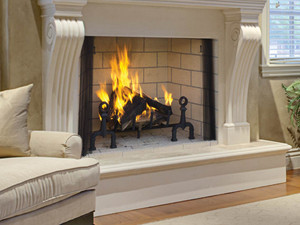
Wood Fireplaces

A wood fireplace delivers the irreplaceable sound, smell, and authenticity of a real wood fire, paired with modern EPA certified combustion technology that burns 70 to 80 percent more efficiently than the open fireplaces of a generation ago.

Today's wood burning appliances bear little resemblance to the open masonry hearths most homeowners grew up with. Modern fireboxes use secondary air injection, catalytic combustors, or hybrid technology to re burn smoke at temperatures high enough to extract heat that used to escape up the chimney. The result is a serious heating appliance that can warm a full floor of your home on one load of firewood, with a fraction of the emissions of older units.

Every wood burning product at Fireplace Insider ships free nationwide with white glove delivery and is backed by our price match guarantee. Browse wood burning fireplaces for new construction, wood inserts to convert an existing fireplace, freestanding wood stoves, and pellet stoves from Osburn, Pacific Energy, Quadra-Fire, Regency, Valcourt, Napoleon, and other premium manufacturers.
20 plus years in the hearth industry Factory authorized dealer NFI certified specialists EPA certified clean burn technology

How to Choose the Right Wood Burning Appliance

Six factors that determine whether a wood appliance fits your home, your habits, and your heating needs.

Pick the right format for your project

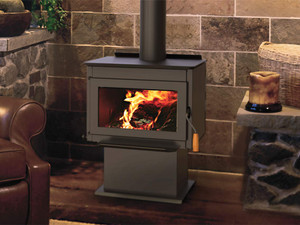
A wood burning fireplace is a complete factory built firebox installed during new construction, framed into a wall with a class A chimney. A wood insert retrofits into an existing masonry or factory built fireplace to upgrade efficiency. A wood stove is freestanding with full visibility on all sides, the highest heat output per dollar. A pellet stove burns compressed wood pellets fed automatically from a hopper, requiring less hands on tending than cord wood.

Confirm EPA certification

Every modern wood appliance sold today must be EPA certified under the 2020 New Source Performance Standards. Certified units emit less than 2.5 grams of particulate per hour, compared to 40 to 60 grams per hour for the open fireplaces of the 1970s and 1980s. Certification is required by federal law, by insurance carriers, and often by local code for installation permits. Verify the EPA tag on the spec sheet before ordering.

Choose your combustion technology

Three combustion types dominate. Non catalytic uses internal baffles and secondary air injection to re burn smoke, simplest and most affordable. Catalytic uses a honeycomb combustor to ignite smoke at lower temperatures, delivering longer burn times but requiring combustor replacement every 5 to 10 years. Hybrid combines both for industry leading 20 to 30 hour burn times, available in flagship models from Blaze King and Pacific Energy.

Size for the area you actually want to heat

Wood appliances are sized in cubic foot firebox capacity, which correlates to heating area. Small (1.0 to 1.5 cubic feet) heats 500 to 1,200 square feet. Medium (1.5 to 2.2 cubic feet) heats 1,000 to 2,000 square feet. Large (2.5 to 3.5 cubic feet) heats 1,800 to 3,000 plus square feet. Oversizing a wood appliance leads to chronic underburning, creosote buildup, and poor performance.

Plan the chimney and venting

Wood appliances require a class A insulated chimney for new installations or a stainless steel chimney liner for inserts retrofitted into existing masonry chimneys. Chimney requirements include minimum height above the roof line, clearances to combustibles, and specific cap and termination details. Chimney work typically adds $1,500 to $4,500 to the install. Skipping the liner or running an undersized chimney is the most common cause of poor draft and underperformance.

Plan for fuel storage and handling

Wood appliances need seasoned cord wood at 15 to 20 percent moisture content. Plan for one to four cords per heating season depending on appliance size and how much of the home you heat. Each cord requires about 128 cubic feet of dry storage. Pellet stoves run on bagged pellets, far less storage but require a steady supply chain. Match the fuel logistics to your property and your willingness to handle wood.

Wood Fireplace Questions

The questions our hearth specialists answer most often before a customer places an order.

Are wood burning fireplaces still legal?

Yes, EPA certified wood appliances are legal nationwide. Open masonry fireplaces (uncertified) are restricted or banned in some jurisdictions, particularly in California, Washington, Oregon, and Colorado where air quality regulations limit non certified wood burning. Every wood appliance sold by Fireplace Insider meets the current EPA 2020 standard and is legal for new installation in all 50 states, though specific local restrictions may apply during air quality alerts.

Are wood fireplaces being phased out?

No, but the technology has changed dramatically. Open masonry fireplaces are being phased out in some regions due to emissions. EPA certified wood burning fireplaces, inserts, and stoves remain legal and popular, particularly in rural areas, in homes with access to firewood, and in regions with extended power outages where wood heat provides energy independence. The modern wood appliance market is growing in the premium segment as buyers seek alternative heat sources.

How much wood does a wood fireplace burn per year?

A wood appliance used as primary heat in a cold climate typically burns 3 to 5 cords per season. As supplemental heat in mild climates, 1 to 2 cords is more typical. Catalytic and hybrid catalytic units extract more heat per pound of wood and reduce annual consumption by 25 to 40 percent compared to non catalytic units. A cord of seasoned hardwood costs $200 to $400 depending on region.

Are wood fireplaces worth it?

For homeowners with access to firewood and a desire for energy independence, yes. A modern EPA certified wood appliance delivers 70 to 80 percent efficiency, can heat a full floor of a home, works during power outages, and produces a fundamentally different ambiance than any gas or electric alternative. The trade off is the labor of cutting, splitting, stacking, and loading wood, plus annual chimney maintenance. Many owners consider those trade offs part of the appeal.

Do wood fireplaces require a chimney?

Yes, every wood burning appliance requires a code compliant chimney or vent system. New construction installations typically use a class A insulated chimney. Retrofitting an insert into an existing masonry fireplace requires a stainless steel chimney liner running the full length of the existing chimney. Pellet stoves use a smaller diameter pellet vent that can terminate through a wall or roof. There is no ventless option for any wood burning appliance.

FI

Curated by the Fireplace Insider hearth team

Fireplace Insider is operated by hearth specialists with more than two decades of fireplace installation experience and thousands of completed projects. Every wood appliance in this category has been vetted by an NFI certified specialist for EPA certification, real world burn time, and proper chimney sizing.

Talk to a hearth specialist