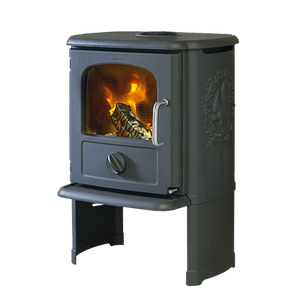
Wood Stoves

A wood stove is the most efficient way to heat a home with cordwood, putting the firebox out in the room where its radiant heat can reach every wall instead of trapping it behind a chase.

Modern wood stoves are EPA certified to burn at 70 to 82 percent efficiency with emissions below 2.5 grams per hour. Outputs range from 25,000 to 90,000 BTUs, heating 800 to 3,000 square feet depending on insulation and floor plan. Every stove Fireplace Insider sells ships free nationwide with white glove delivery and is backed by our 20 plus years of hearth industry experience and price match guarantee.

We carry wood stoves from Pacific Energy, Quadra-Fire, Osburn, Napoleon, Regency, Valcourt, and Majestic, in cast iron, steel plate, and soapstone bodies. For built in models that drop into an existing masonry fireplace, see our Wood Burning Inserts collection.
EPA Certified Models NFI Certified Specialists Free White Glove Shipping Price Match Guarantee

How to Choose the Right Wood Stove

Six factors that separate the right wood stove from a hot, smoky disappointment.

Size BTU output to your insulated square footage

Wood stoves are sold as small, medium, and large by firebox volume. Small stoves (1.0 to 1.7 cubic feet, around 35,000 BTU) heat 800 to 1,300 square feet. Medium stoves (1.7 to 2.5 cubic feet, around 55,000 BTU) heat 1,300 to 2,000. Large stoves (2.5 to 3.5 cubic feet, up to 80,000 BTU) heat 2,000 to 3,000. Oversized stoves cause smoldering, creosote, and short burns.

Choose between catalytic and non catalytic

Non catalytic stoves use secondary air tubes above the fire to re-burn smoke. They are simpler to operate and need less maintenance. Catalytic stoves route exhaust through a ceramic honeycomb coated with a catalyst that lights off at lower temperatures, yielding longer burn times and higher peak efficiency. Catalytic stoves cost more and require occasional combustor replacement.

Match the stove body material to your goals

Steel plate stoves heat fast and cool fast, ideal for shoulder season fires when you want quick warmth. Cast iron stoves heat moderately fast and hold heat longer for evenings. Soapstone stoves heat slowly but radiate steady warmth for 8 to 12 hours after the fire dies down, ideal for overnight burns and continuous winter use.

Confirm clearance to combustibles

Wood stoves require minimum clearance to walls and furniture published in the install manual, typically 12 to 36 inches without a heat shield and 8 to 18 inches with one. The hearth pad under the stove must extend 16 inches in front and 8 inches on each side, with a minimum R value or thickness specified by the manufacturer.

Plan the chimney before you order

Wood stoves require a Class A insulated chimney sized to the appliance flue collar, typically 6 inches in diameter. The chimney must extend 3 feet above the roof penetration and 2 feet above any roofline within 10 feet. Total vertical height of at least 15 feet from stove to cap is recommended for reliable draft.

Burn properly seasoned wood

A wood stove is engineered for dry hardwood at 15 to 20 percent moisture content. Wet wood smolders, creates creosote, and dramatically reduces heat output. Oak and hickory need 12 to 18 months of split storage. Maple and ash need 8 to 12 months. A moisture meter costs less than 30 dollars and pays for itself in one winter.

Wood Stove Questions

The questions our hearth specialists answer most often before a customer places an order.

How long can a wood stove burn on one load of wood?

Modern EPA certified wood stoves typically burn 6 to 10 hours on a full load of seasoned hardwood. Catalytic stoves and large soapstone stoves can extend that to 10 to 14 hours at low burn rates. Burn time depends heavily on wood density, moisture content, and air control setting.

Is a wood stove cheaper to run than a furnace?

In most regions yes, especially if you can source firewood locally. A cord of seasoned hardwood at 250 to 400 dollars produces the heat equivalent of 200 gallons of fuel oil or 200 therms of natural gas. Free or trade priced firewood makes wood the cheapest fuel available.

Can a wood stove be installed in a manufactured home?

Only mobile home approved stoves are legal in manufactured homes, and they must be installed with an outside combustion air kit and proper anchoring. The label inside the stove will indicate manufactured home approval. Standard residential stoves cannot be installed legally in mobile homes regardless of the home's age.

How much does professional installation cost?

Installation typically runs 2,500 to 6,000 dollars depending on chimney length, framing complexity, and hearth construction. A simple straight up chimney through a single story roof is on the low end. A two story home with multiple offsets or a through wall route adds cost. New construction is generally cheaper than retrofitting.

How long do wood stoves last?

A quality wood stove lasts 25 to 40 years with normal use and annual maintenance. Firebrick liners last 10 to 20 years and are replaceable. Catalytic combustors typically need replacement every 6 to 10 years at a cost of 200 to 400 dollars. The cast iron or steel body itself rarely fails.

FI

Curated by the Fireplace Insider hearth team

Fireplace Insider is operated by hearth specialists with more than two decades of fireplace installation experience and thousands of completed projects. Every wood stove in this category has been vetted by an NFI certified specialist for EPA certification, BTU sizing, and burn time performance.

Talk to a hearth specialist