Gas Fireplaces

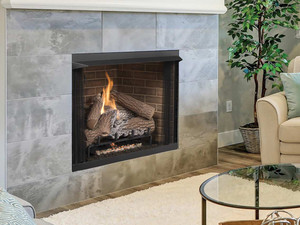
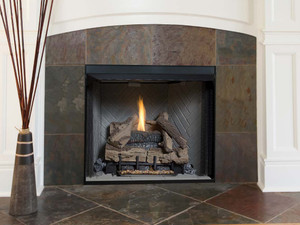
A gas fireplace delivers real flame, instant warmth, and an authentic hearth experience with the convenience of a thermostat and the efficiency of a modern heating appliance.

Gas fireplaces have replaced wood as the default choice for new construction and major remodels in the United States. They light instantly with a switch or remote, produce no smoke or ash, deliver 70 to 85 percent efficiency, and can be installed almost anywhere through direct vent or vent free technology. Every gas fireplace at Fireplace Insider ships free nationwide with white glove delivery and is backed by our price match guarantee.

Browse the full range of gas formats from Napoleon, Heat & Glo, Majestic, Superior, Montigo, and other premium manufacturers, including direct vent gas fireplaces, gas inserts for converting existing fireplaces, vent free models, multi sided configurations, and vented and vent free gas log sets.

20 plus years in the hearth industry Factory authorized dealer NFI certified specialists 70 to 85 percent efficiency

How to Choose the Right Gas Fireplace

Six decisions that determine which gas fireplace category fits your project, your budget, and your space.

Decide between a fireplace, an insert, or a log set

A gas fireplace is a complete factory built firebox installed during new construction or a remodel, framed into a wall or chase. A gas insert drops inside an existing wood fireplace opening to convert it to gas. A gas log set is the simplest option, a burner and ceramic logs that sit inside an existing fireplace for ambiance with limited heat output. Match the format to whether you are building, retrofitting, or just upgrading aesthetics.

Choose your venting technology

Direct vent uses a sealed coaxial pipe that draws outside air and exhausts outside, no chimney required, 70 to 85 percent efficient, code compliant nationwide. B vent uses indoor combustion air and vents up an existing chimney, limited installation flexibility. Vent free burns gas inside the home with no exhaust, 99 percent efficient but restricted by code in several states. Direct vent is the modern standard for most installations.

Pick the configuration

Gas fireplaces come in single sided (the standard), see through (visible from two rooms), peninsula (three sided), corner (two sided), and linear (long horizontal opening) configurations. Single sided is the easiest and most affordable. Multi sided units are sculptural focal points and add 30 to 60 percent to the unit cost. Linear is the dominant choice in modern open floor plans.

Match BTU output to your room

Gas fireplaces range from 15,000 to 60,000 BTU. As a guideline, plan on 20 to 30 BTUs per square foot of insulated space. Use the BTU calculator for an accurate sizing that adjusts for ceiling height and insulation. Oversizing causes short cycling, overheated rooms, and forces operators to leave the door cracked open to compensate.

Confirm fuel type and supply

Most gas fireplaces ship configured for either natural gas (from a utility supply line) or liquid propane (from a tank). Most are field convertible with a conversion kit. Natural gas is cheaper per BTU and never runs out. Propane delivers slightly higher BTU per cubic foot and is the only option in homes off the gas main. Confirm fuel type at checkout before installation.

Plan for controls and heat management

Three control tiers exist. Standing pilot with a wall switch is simplest and works during power outages. Intermittent ignition with battery backup lights only on demand, saving gas. Smart controls add WiFi, app control, and programmable thermostats. If you plan to mount a TV above the fireplace, also look for built in heat management systems that redirect heat away from the wall above.

Gas Fireplace Questions

The questions our hearth specialists answer most often before a customer places an order.

What is the difference between a gas fireplace, gas insert, and gas log set?

A gas fireplace is a complete factory built unit installed during construction, framed into a wall with vent piping. A gas insert is a sealed unit designed to fit inside an existing wood burning fireplace to convert it to gas. A gas log set is the simplest option, a burner with ceramic logs that sits inside an existing fireplace, providing flame and modest heat without the sealed combustion of a true insert. Cost runs roughly $400 to $1,500 for a log set, $2,500 to $8,000 for an insert, and $1,500 to $15,000 for a full fireplace depending on configuration.

Are gas fireplaces efficient?

Modern gas fireplaces deliver 70 to 85 percent AFUE efficiency, comparable to a high efficiency furnace and dramatically better than the 10 to 15 percent of an open wood fireplace. Vent free models reach 99 percent efficiency because nothing exhausts outside, though they are restricted by code in several states. Direct vent is the most common modern installation and offers the best balance of efficiency, safety, and installation flexibility.

How much does it cost to run a gas fireplace?

A typical 25,000 BTU gas fireplace running on natural gas costs about $0.25 to $0.45 per hour at average US gas prices. Running 4 hours a day during a 6 month heating season totals roughly $180 to $325. Propane is more expensive, typically 2 to 3 times the cost of natural gas per BTU. Many homeowners find that supplementing central heat with a gas fireplace in the most used room actually lowers the total heating bill by allowing the central thermostat to drop a few degrees.

Do gas fireplaces need a chimney?

Direct vent gas fireplaces do not need a traditional chimney. They use a coaxial pipe that can terminate through any exterior wall or through the roof. B vent models require an existing chimney. Vent free models require no venting at all. The lack of chimney requirement is why direct vent has become the standard for new construction.

Can a gas fireplace heat a whole room?

Yes. A correctly sized direct vent gas fireplace at 25,000 to 40,000 BTU heats a 600 to 1,200 square foot room comfortably. With a built in blower pushing convected air, the heat distributes throughout the space rather than stratifying at the ceiling. Many homeowners use a gas fireplace as zone heat for the primary living area and run central heat at a lower setpoint, often saving on the total energy bill.

FI

Curated by the Fireplace Insider hearth team

Fireplace Insider is operated by hearth specialists with more than two decades of fireplace installation experience and thousands of completed projects. Every gas fireplace in this category has been vetted by an NFI certified specialist for venting, efficiency, and real world heat output.

Talk to a hearth specialist