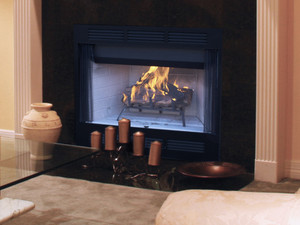
Prefab Wood Fireplaces

A prefab fireplace delivers the crackle, scent, and radiant heat of real wood combustion in a code compliant, EPA certified appliance designed for daily use rather than ceremonial fires.

Modern prefabricated fireplaces are engineered firebox systems with insulated air channels, secondary combustion baffles, and Class A factory chimney compatibility. Outputs typically range from 50,000 to 100,000 BTUs, with EPA certified models burning at 65 to 80 percent efficiency. Every fireplace Fireplace Insider sells ships free nationwide with white glove delivery, and is backed by our 20 plus years of hearth industry experience and price match guarantee.

We carry prefab wood fireplaces from Napoleon, Superior, Astria, Majestic, Pacific Energy, Quadra-Fire, and Mason-Lite, in EPA certified clean burn and traditional radiant designs. For drop in upgrades to an existing masonry fireplace, see our Wood Burning Inserts collection.

EPA Certified Options Factory Authorized Dealer Free White Glove Shipping Price Match Guarantee

How to Choose the Right Wood Burning Fireplace

Six factors that determine whether your wood fireplace will heat efficiently and meet local code.

Decide between EPA certified and radiant

EPA certified wood fireplaces burn at 65 to 80 percent efficiency with secondary combustion that re-burns smoke and reduces emissions to under 2.5 grams per hour. Traditional radiant wood fireplaces are simpler and less expensive but deliver more heat up the chimney. EPA certified is required in some jurisdictions and recommended for daily use. Radiant is fine for occasional ambiance fires.

Size the firebox to the room

Wood fireplaces are categorized by viewing area and BTU output. Plan on 20 to 30 BTUs per square foot for occasional use and 30 to 40 for a primary heat source. A 36 inch firebox produces 50,000 to 70,000 BTUs and heats 1,500 to 2,500 square feet with EPA certified efficiency. Our BTU Calculator helps narrow the range.

Confirm chimney height and configuration

Every wood burning fireplace requires a Class A insulated chimney that extends at least 3 feet above the roof penetration and 2 feet above any roof line within 10 feet. The chimney must be sized to the appliance, typically 8 to 10 inches in diameter. Plan the vertical route during framing because offsets reduce draft and combustion performance.

Plan for outside combustion air

Newer homes with tight energy envelopes can starve a wood fireplace of combustion air, causing smoke spillage and poor performance. An outside air kit pulls fresh air directly to the firebox through a duct. Many EPA certified fireplaces include the kit as standard. Verify the requirement in your install manual and local code.

Choose your hearth and surround materials

Wood fireplaces require non combustible hearth extension typically 16 to 20 inches in front of the firebox opening and 8 inches on each side. Hearth pads, stone, tile, and brick all qualify. Combustible mantels and trim must remain outside the minimum clearance zones published in the install manual, usually 6 to 12 inches from the opening edge.

Source seasoned hardwood

A wood fireplace is only as good as the fuel. Burn hardwood split at least six months, ideally 12 to 18 months, at 15 to 20 percent moisture content. Oak, hickory, maple, and ash deliver the longest burn time and highest heat output. Pine and softwoods are fine for kindling but produce more creosote when used as the primary fuel.

Wood Burning Fireplace Questions

The questions our hearth specialists answer most often before a customer places an order.

Are wood burning fireplaces still legal?

Yes in most jurisdictions, though several Western states and air quality districts require EPA certified models or restrict installation on burn ban days. California, Oregon, and Washington have the strictest rules. Check with your local building department before ordering. EPA certified models satisfy almost every jurisdiction in the country.

How often should the chimney be cleaned?

A wood burning fireplace chimney should be inspected annually and swept whenever creosote buildup reaches an eighth of an inch. Daily use households typically schedule a sweep every season. Occasional use households can usually wait two or three seasons. Cleaning prevents chimney fires and maintains draft.

What is secondary combustion?

Secondary combustion is the process in EPA certified wood fireplaces where preheated air is injected above the primary fire to ignite smoke and unburned gases. The result is a cleaner burn with less particulate emission, higher efficiency, and longer burn time on a single load of wood. It is the core technology behind modern wood appliance certification.

Can a wood burning fireplace heat my whole house?

A correctly sized EPA certified wood fireplace can heat a 2,000 to 3,000 square foot open floor plan home in cold climates as a primary or supplemental heat source. Whole house heating works best with a central location and an open floor plan. Multi level homes or closed floor plans typically require a furnace or boiler in addition.

How long does a wood burning fireplace last?

Quality wood burning fireplaces have a service life of 25 to 40 years. Refractory firebrick liners typically last 10 to 20 years and can be replaced. The steel firebox shell, baffle, and outer cabinet often outlast the home. Annual inspection and seasoned wood are the two biggest factors in long service life.

FI

Curated by the Fireplace Insider hearth team

Fireplace Insider is operated by hearth specialists with more than two decades of fireplace installation experience and thousands of completed projects. Every wood burning fireplace in this category has been vetted by an NFI certified specialist for EPA compliance, chimney compatibility, and burn performance.

Talk to a hearth specialist