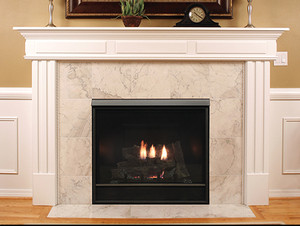
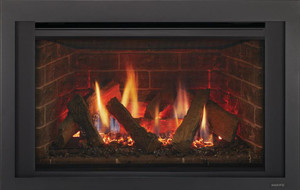
Gas Fireplace Inserts

A gas fireplace insert is the most efficient way to bring a cold, drafty masonry fireplace back to life without the cost or disruption of a full rebuild.

Inserts drop into your existing firebox and convert it into a sealed, high efficiency heat source rated between 70 and 85 percent AFUE, compared to the 10 to 15 percent efficiency of a traditional open wood fire. Every gas fireplace insert at Fireplace Insider ships free nationwide with white glove delivery, comes from a factory authorized brand, and is backed by our price match guarantee.

We carry direct vent, B vent, and vent free gas inserts from Napoleon, Heat & Glo, Superior, Majestic, Empire, and other premium hearth manufacturers. If you are unsure which model fits your fireplace opening, our free insert sizing calculator will narrow your options in under two minutes.

20 plus years in the hearth industry Factory authorized dealer NFI certified specialists 10,000 plus installations referenced

How to Choose the Right Gas Fireplace Insert

Six factors that determine whether an insert will fit, vent correctly, and heat your space the way you expect.

Measure the firebox opening first

Gas inserts are sized to fit inside an existing masonry or factory built firebox. You will need the front width, rear width, depth, and height of the opening. Most inserts list a required minimum opening that is slightly smaller than the unit itself to allow for the surround flange. Measure twice, then use our sizing calculator to filter the catalog automatically.

Match BTU output to your room size

An oversized insert in a small room will short cycle and waste fuel. An undersized one in a great room will never reach setpoint. As a rough guideline, plan on 20 to 30 BTUs per square foot for an average insulated space. Our BTU calculator adjusts for ceiling height, insulation, and climate zone.

Choose your venting type

Direct vent is the most common choice for gas inserts. It uses a co axial liner that runs up your existing chimney, drawing combustion air from outside and exhausting outside through a sealed system. B vent uses natural draft and indoor combustion air, which limits installation flexibility. Vent free requires no chimney at all but is restricted by code in several states, including parts of California, Massachusetts, and certain Canadian provinces. Check your local jurisdiction before ordering.

Decide between natural gas and propane

Most inserts ship configured for either natural gas or liquid propane and are field convertible with a conversion kit. If your home already has a gas line to the fireplace, natural gas is typically the cheaper fuel. Propane delivers slightly higher BTU per cubic foot and is the standard choice for homes off the gas main. Confirm fuel type at checkout. The conversion kit is a small add on.

Plan for the chimney liner

Direct vent inserts require a co linear or co axial flexible aluminum liner running from the unit through the existing chimney flue. The liner is sold separately from the insert in most cases and must match the manufacturer specification. A licensed gas installer will pull a permit, install the liner, and pressure test the connection before commissioning the appliance. Budget $800 to $1,800 for professional installation depending on chimney height and complexity.

Look at the features that matter day to day

Beyond fit and venting, the features that change the ownership experience are ignition type (electronic ignition runs without a constant pilot, saving gas), battery backup (operates during a power outage), variable flame and heat control, remote or thermostat compatibility, and blower options to push warm air into the room. Premium models from Napoleon, Heat & Glo, and Valor include most of these as standard.

Gas Fireplace Insert Questions

The questions our hearth specialists answer most often before a customer places an order.

What is the average cost of a gas fireplace insert?

A quality gas fireplace insert typically runs $2,500 to $6,000 for the unit itself, with premium models from Valor, Heat & Glo, and Napoleon reaching $7,000 to $10,000. Add $800 to $1,800 for professional installation, which includes the chimney liner, gas line connection, permits, and pressure testing. The total installed cost for most homeowners lands between $4,000 and $8,000, depending on brand, BTU rating, and venting complexity.

Are gas fireplace inserts worth the money?

For homeowners with an existing wood burning fireplace that is rarely used, yes. A gas insert converts a 10 to 15 percent efficient heat sink (most open fireplaces actually pull warm air out of the home through the chimney) into a 70 to 85 percent efficient heater. Most homeowners recover the investment within 7 to 10 years through reduced primary heating costs, and the resale value of an upgraded fireplace typically returns 60 to 70 percent of the install cost at the time of sale.

What are the disadvantages of a gas fireplace insert?

Three main considerations. First, you lose the option of a real wood fire in that fireplace. The conversion is permanent in practice, even though the insert can be removed. Second, the flame appearance, while excellent in modern models, is not identical to a real wood fire. Third, gas inserts depend on a fuel supply and, for electronic ignition models, a power source. Models with battery backup or standing pilot can still operate during a power outage.

Do I need a chimney for a gas fireplace insert?

Direct vent and B vent gas inserts both require an existing chimney to run the vent liner through. Vent free inserts do not require a chimney and can be installed in any fireplace opening, but they are not legal in all jurisdictions. Massachusetts, California, and parts of New York restrict or prohibit vent free installations. Check your local building code before ordering a vent free model.

How long does a gas fireplace insert last?

A quality gas insert from a premium manufacturer has a typical service life of 15 to 25 years. The firebox itself often lasts longer. The components most likely to need service are the blower motor (10 to 15 years), the thermocouple or thermopile on standing pilot models (5 to 10 years), and the remote or wall control electronics. Annual maintenance (a professional cleaning and pilot inspection) extends the life of the unit significantly and is required to keep most manufacturer warranties valid.

FI

Curated by the Fireplace Insider hearth team

Fireplace Insider is operated by hearth specialists with more than two decades of fireplace installation experience and thousands of completed projects. Every product in this category has been vetted by an NFI certified specialist for fit, venting, and real world performance.

Talk to a hearth specialist