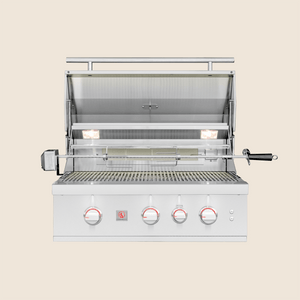
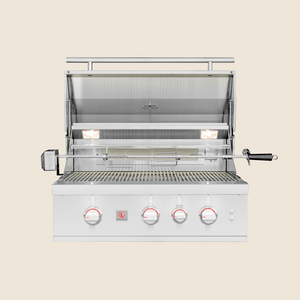
Built-In Gas Grills

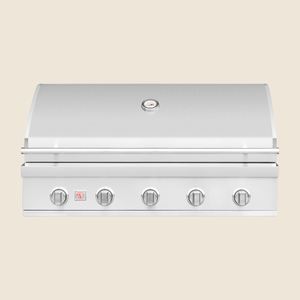
A built-in gas grill installs flush into a custom outdoor kitchen island, replacing a freestanding cart with a sealed stainless steel cooking head designed to anchor a permanent patio kitchen.

Built-in gas grills are sized in widths from 24 to 48 inches and produce 50,000 to 150,000 BTUs across multiple burners. Premium models use 304 grade stainless steel construction, infrared sear stations, and rotisserie systems rated for daily outdoor use. Every grill Fireplace Insider sells ships free nationwide with white glove delivery, and is backed by our 20 plus years of hearth industry expertise and price match guarantee.

We carry built-in gas grills from Fire Magic and Summerset in natural gas and propane configurations, with multiple cooking surface sizes and tier options. For freestanding alternatives, see our Post-Mount Gas Grills collection or browse Outdoor Kitchen components.
304 Stainless Construction Factory Authorized Dealer Free White Glove Shipping Price Match Guarantee

How to Choose the Right Built-In Gas Grill

Six factors that determine whether your built-in grill will last 20 years or 5.

Size cooking surface to your household

Built-in grills are sized by cooking width and burner count. A 30 inch grill with three burners and 540 square inches of cooking area suits a family of four. A 36 inch four burner with 700 square inches handles regular entertaining. A 48 inch grill with 1,000 plus square inches is for serious volume cooking. Buy slightly larger than your typical use, never smaller.

Demand 304 grade stainless steel

Outdoor grilling exposes a grill to rain, salt air, grease, and temperature extremes. 304 grade stainless steel resists corrosion for 15 to 20 years. 430 grade and unspecified stainless steel rust within 2 to 5 years, especially near coastlines. Verify the grade in the spec sheet for the hood, body, burners, and grates separately.

Choose burner type by cooking style

Cast stainless tube burners are the standard, delivering even heat distribution and 8 to 12 year service life. Infrared sear stations on premium grills hit 1,000 degrees Fahrenheit for restaurant grade steak crust. Rotisserie burners mounted on the back wall slow cook whole birds and roasts. Pick the burner mix that matches what you actually cook.

Verify gas type and supply

Built-in grills run on natural gas or propane. Natural gas needs a dedicated 1/2 or 3/4 inch supply line plumbed from the home with proper pressure regulation. Propane uses an external tank with a 3/8 inch flexible line and quick disconnect. Conversion kits exist but must be factory ordered for warranty coverage on most premium brands.

Plan the island cutout precisely

Every built-in grill requires an exact cutout dimension published by the manufacturer. Vent cutouts on the front, sides, or rear of the island are required to dissipate heat and prevent propane buildup. Combustible materials must be set back per manufacturer spec, typically 1 to 3 inches around the grill body. Read the install manual before pouring concrete.

Compare warranty terms

Premium built-in grills carry lifetime warranties on the hood and main body, 15 years on burners, and 5 to 10 years on grates and igniters. Budget brands typically warrant the hood for 5 years and burners for 1 to 3. The warranty terms are a reliable proxy for build quality and expected service life.

Built-In Gas Grill Questions

The questions our hearth specialists answer most often before a customer places an order.

How long do built-in gas grills last?

A premium 304 stainless built-in grill lasts 15 to 20 years with regular cleaning and a fitted cover. Burners are the first wear part and typically last 8 to 12 years before replacement. Igniters last 3 to 7 years. The hood and main body usually outlast the home itself when built from heavy gauge 304 stainless.

What is the BTU difference between a built-in and a cart grill?

Built-in grills typically deliver 90,000 to 150,000 BTUs, compared to 30,000 to 60,000 for budget cart grills. Higher BTUs mean faster preheat, better sear, and more even heat across a larger cooking surface. They also require larger gas supply lines and proper venting in the island.

Can I install a built-in grill in a covered patio?

Only with adequate overhead clearance and ventilation. Most manufacturers require a minimum of 8 feet of vertical clearance and prohibit installation under fully enclosed roofs or screened porches. Combustible ceilings require non combustible shielding. Verify clearances in the install manual before framing.

Do I need vents in the island for a built-in grill?

Yes, especially for propane installations. Vents on the front and sides of the island prevent propane (which is heavier than air) from pooling in the cavity below the grill. Most manufacturers specify two 14 by 6 inch vents at minimum. Failure to vent properly is a safety hazard and voids most warranties.

What is the cost difference between budget and premium built-in grills?

Entry tier built-in grills run 1,500 to 3,000 dollars and last 5 to 7 years. Mid tier 304 stainless grills from major brands run 3,500 to 6,000 dollars and last 10 to 15 years. Premium grills from Fire Magic and Summerset run 5,000 to 12,000 dollars and last 15 to 20 plus years with warranty backing.

FI

Curated by the Fireplace Insider hearth team

Fireplace Insider is operated by hearth specialists with more than two decades of fireplace and outdoor kitchen installation experience. Every built-in gas grill in this category has been vetted by an NFI certified specialist for stainless grade, burner construction, and outdoor service life.

Talk to a hearth specialist