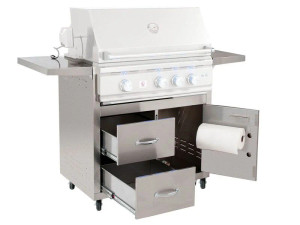
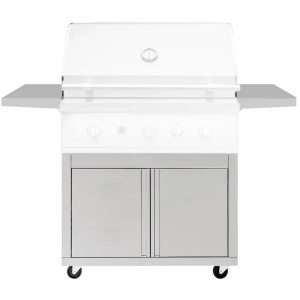
Grills

A built in grill is the anchor of any serious outdoor kitchen, delivering restaurant grade performance, professional materials, and a permanent installation that elevates the entire backyard.

Built in and drop in grills differ from portable cart grills in three meaningful ways. They use heavier gauge 304 stainless steel construction (typical lifespan 15 to 25 years versus 5 to 8 for cart grills), they integrate seamlessly into a custom outdoor counter or island, and they accept dedicated natural gas or propane connections rather than a portable tank. Every grill at Fireplace Insider ships free nationwide with white glove delivery and is backed by our price match guarantee.

Browse the full range from Fire Magic, Summerset, and other premium outdoor kitchen specialists, including built in gas grills, built in charcoal grills, drop in gas grills for existing counter cutouts, and post mount gas grills for installations without a counter.

20 plus years in the hearth industry Factory authorized dealer 304 stainless construction 15 to 25 year service life

How to Choose the Right Built In Grill

Six considerations that determine whether your outdoor kitchen is a 5 year project or a 25 year investment.

Pick the installation format

Built in grills drop into a finished countertop cutout with a flange that rests on the counter surface, the standard for new outdoor kitchen construction. Drop in grills are similar but typically smaller and designed to be replaced more easily. Post mount grills bolt to a vertical pedestal in the ground, ideal for poolside or deck installations where a full counter is not practical. Choose the format based on whether you are building a counter or working around existing hardscape.

Verify the stainless steel grade

The single most important spec for an outdoor grill is the stainless grade. 304 stainless resists corrosion and is the standard for premium built in grills, with typical service life of 15 to 25 years. 430 stainless is magnetic, lower cost, and corrodes within 3 to 7 years in coastal or humid environments. Many entry level grills advertise stainless steel but use 430 grade. Verify the grade on the spec sheet, especially in coastal regions where salt air accelerates corrosion.

Match BTU output to grill size

Premium grills deliver 90 to 100 BTU per square inch of primary cooking surface, the threshold for true high heat searing. Mainstream grills land at 70 to 85 BTU per square inch, adequate for most cooking but slower to recover heat after opening the lid. A 36 inch built in grill with 700 to 850 square inches of primary cooking surface should produce 60,000 to 90,000 BTU total from the main burners.

Choose your fuel source

Natural gas is the standard for built in grills, requiring a permanent gas line from the house but eliminating tank swaps. Liquid propane works for installations off the gas main and most built in models are field convertible between fuels with a conversion kit. Charcoal built in grills offer authentic smoke flavor and are the choice for serious grilling enthusiasts, though they require more setup and longer warm up than gas.

Evaluate the burner technology

Premium grills use cast stainless steel burners with 10 to 15 year warranties, dramatically outlasting the 2 to 5 year service life of stamped tube burners on entry level units. Look also for a flame tamer or flavorizer bar system above the burners that vaporizes drippings for added flavor and prevents flare ups. Infrared sear burners on a side or rear burner provide the 1,500 degree plus heat needed for restaurant style steakhouse sears.

Plan for accessories and counter space

A built in grill is typically the centerpiece of a larger outdoor kitchen. Plan for 24 inches of counter space on each side of the grill for prep and plating. Common accessories include side burners for sauces and sides, access drawers for tank storage on propane installations, and refrigerator drawers to keep meats and beverages cold without trips inside. Build the counter once with the layout you want long term, not the minimum to get the grill in.

Built In Grill Questions

The questions our outdoor kitchen specialists answer most often before a customer places an order.

What is the difference between a built in grill and a cart grill?

A built in grill drops into a permanent counter with the grill body integrated into the surrounding hardscape. They use 304 stainless construction and are engineered for 15 to 25 year service life. Cart grills are freestanding portable units on wheels with attached side shelves, typically using lighter gauge 430 stainless and lasting 5 to 8 years. Built in grills cost 2 to 4 times more upfront but deliver dramatically longer life, better cooking performance, and a permanent installation that adds resale value.

How much does a built in grill cost?

Quality built in grills run from $2,000 to $12,000 for the grill itself, with premium 36 to 48 inch models from Fire Magic and Summerset typically in the $4,000 to $8,000 range. Add $3,000 to $15,000 for the counter, hardscape, gas line, electrical, and surrounding outdoor kitchen components. A complete outdoor kitchen with a built in grill, side burner, refrigerator, and stone counter typically totals $15,000 to $40,000 installed.

Is 304 stainless steel worth the extra cost?

Yes, in any environment with humidity, coastal exposure, or temperature swings. 304 stainless contains 18 percent chromium and 8 percent nickel, giving it true corrosion resistance. 430 stainless contains less nickel and corrodes within 3 to 7 years in coastal climates. The price difference between 430 and 304 construction adds roughly 30 to 50 percent to the grill cost but extends service life by 10 to 15 years. For a built in installation that is expensive and inconvenient to replace, 304 is the only sensible choice.

Do built in grills need a hood or vent?

Built in grills installed in an open outdoor location do not require a hood. Installations under a covered patio, pergola, or roof require specific overhead clearance (typically 8 to 12 feet from the grill surface to the ceiling) or a vent hood with adequate CFM extraction. Local code may also require gas detection sensors in enclosed or partially enclosed outdoor kitchens. Always verify clearance and ventilation requirements against your install location before ordering.

Can I convert a natural gas grill to propane?

Yes, most premium built in grills are field convertible between natural gas and liquid propane using a conversion kit supplied by the manufacturer. The kit includes different orifices sized for each fuel type. Conversion should be performed by a licensed gas technician, both for safety and to keep the manufacturer warranty valid. Confirm conversion availability for the specific model before ordering if you anticipate switching fuels.

FI

Curated by the Fireplace Insider hearth team

Fireplace Insider is operated by hearth and outdoor living specialists with more than two decades of installation experience. Every built in grill in this category has been vetted for stainless grade, burner construction, BTU output per square inch, and real world reliability in outdoor conditions.

Talk to an outdoor kitchen specialist