
Best Electric Fireplace Guide (2026): Built-In, Insert, Linear, Stove, or Water Vapor?
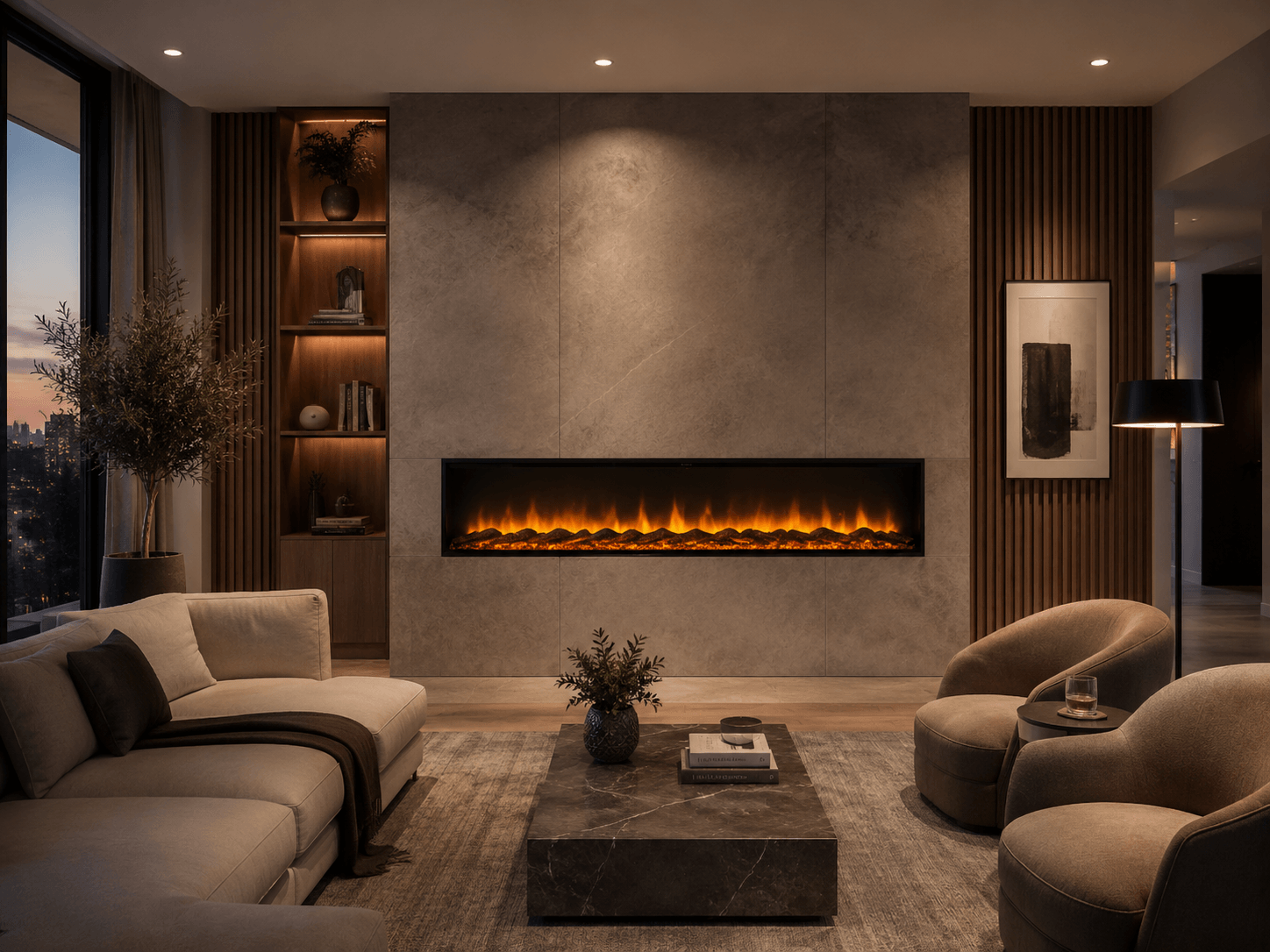
Electric fireplaces have evolved far beyond the flat-screen flame effect of a decade ago. You can now buy a built-in linear electric fireplace for a modern feature wall, an insert that drops into an old masonry fireplace, a freestanding electric stove for a bedroom or den, or a water vapor fireplace that creates a three-dimensional flame effect using illuminated mist.
The first question we ask at Fireplace Insider is simple: what is the purpose of the fireplace? If the goal is ambiance, design flexibility, and simple installation, an electric fireplace can be a great choice. If the goal is serious heating or whole-house heat, electric usually is not the right product. This guide breaks down the five categories of electric fireplaces, what each is best for, and the brands worth shortlisting in 2026.
Why People Choose Electric in 2026
Three reasons drive the bulk of electric fireplace decisions.
Installation flexibility. No gas line, no chimney, no venting. Plug into a standard outlet for many models, or hardwire for larger units. Apartments, condos, second-floor bedrooms, basements, finished garages, offices, and media walls are all places where gas may not be practical and electric is much easier to plan.
Lower upfront and operating cost. A quality electric fireplace can cost much less than a comparable gas or wood installation because there is no venting, chimney liner, gas line, or masonry work in many projects. A standard 1,500-watt heater is also simple to estimate because the operating cost is based on your local electric rate.
Year-round flame effect. Every modern electric fireplace separates the flame effect from the heater. You can run the flames in summer for ambiance and add heat in winter when you want supplemental warmth. Gas and wood fireplaces do not work the same way.
Fireplace Insider note: The biggest mistake we see is customers expecting an electric fireplace to look exactly like real fire. Electric flames are not real flames. They are an illusion created with flickering LED lights, LCD screens, holographic-style effects, mirrors, media beds, or water vapor technology. Premium models can look beautiful, but customers should understand what they are buying before comparing electric to gas or wood.
What electric won't do: primary whole-house heating. Most electric fireplaces are for ambiance and supplemental room heat. They can take the chill off a room, but they should not be expected to heat a whole house. If primary heat is the goal, look at gas or wood.
The Five Types of Electric Fireplaces
Every electric fireplace falls into one of five categories. The category you need depends on where it's going, how realistic you want the flame effect to look, how much heat you expect, and what you want the finished wall or room to look like.
| Type | Best For | Typical Price |
|---|---|---|
| Built-in firebox | New construction, custom wall | $1,000–$3,500 |
| Electric insert | Retrofit into existing masonry | $400–$1,800 |
| Electric stove | Freestanding, traditional look | $300–$1,200 |
| Linear electric | Modern feature wall | $800–$4,500 |
| Water vapor | Maximum flame illusion, no real fire | $2,000–$8,000+ |
Built-In Electric Fireboxes
A built-in firebox is a self-contained unit designed to be framed into a new or existing wall and finished with whatever surround material you choose — tile, stone, drywall, wood, or cabinetry. The unit looks like a traditional fireplace once finished. It does not need venting, a chimney, or a gas line — only the proper electrical connection.
Built-ins range from compact sizes to larger fireboxes. Look for models with realistic log sets, multi-color flame technology, remote control, and a heater that can operate separately from the flame effect.
Best for: new construction, renovations where you want a fireplace look on a wall that doesn't have one, and anyone who likes the proportions of a traditional fireplace without the venting work.
Shop built-in electric fireboxes.
Electric Inserts
An electric insert slides into an existing masonry fireplace and replaces the open firebox with a unit that produces a flame effect and supplemental heat. It is one of the fastest and simplest upgrade paths for a fireplace you have but never use.
Installation is usually straightforward: measure your firebox, choose an insert that fits, slide it in, and plug it into a nearby outlet when the model allows. No chimney liner, no gas line, and no venting are required. The original chimney can sometimes be sealed off to reduce drafts.
Best for: homeowners who want to retire an old wood fireplace without the cost or complexity of a gas insert. You lose the stronger heat output of gas or wood, but you gain easy operation, simple installation, and low maintenance.
Shop electric inserts.
Electric Stoves
An electric stove is a freestanding unit styled to look like a traditional wood or gas stove — classic stove body, log set behind glass, and traditional proportions. It plugs into a standard outlet and sits anywhere with the proper clearance and access to power.
Practical use cases include a bedroom corner, a finished basement, a sunroom, a den, a small office, or a rental property where structural changes are not allowed. Electric stoves are mostly for ambiance and supplemental heat in smaller spaces.
Best for: renters, anyone wanting the traditional stove silhouette without venting, and quick-add ambiance in any room with an outlet.
Shop electric stoves.
Linear Electric Fireplaces
Linear electric fireplaces are one of the most popular categories for modern homes. Wider than they are tall — often 50, 60, 72, 80, or even 100+ inches wide — they are designed to become the focal point of a modern living room, bedroom, office, or media wall.
The flame effect on premium linear electrics is usually multi-color, often with crystal, driftwood, or mixed media options instead of traditional logs. Many include downlighting, ember bed colors, and flame speed controls in addition to the basic flame effect.
Best for: contemporary spaces, designer-driven renovations, and anyone who wants the wide horizontal proportion of a modern gas linear fireplace without the gas installation. Visually, they read as a design feature first and a supplemental heater second.
Shop linear electric fireplaces.
Water Vapor Fireplaces
This is the category that catches people off guard. Water vapor fireplaces use an ultrasonic transducer to turn water into an ultra-fine mist, then illuminate the rising mist with LED lighting. The result is a three-dimensional flame illusion with depth and movement that flat-screen electric fireplaces cannot match.
You can run your hand through the “flame” because it is cool water vapor, not combustion. The effect can look very realistic, especially in the right lighting and installation, but it is still not real fire. It is a high-end illusion designed for ambiance.
What to know before you buy
- Heat is limited or nonexistent. Most water vapor models are flame-effect-first products. If heat output matters, check the spec sheet carefully.
- Use distilled or demineralized water. Hard tap water can leave mineral deposits on the ultrasonic parts over time and reduce mist output.
- Reservoirs need refilling. Runtime per fill depends on the model. Some can be plumbed for continuous operation.
- Mist is real moisture. The unit adds a small amount of humidity to the room. This may be helpful in dry spaces and noticeable in already humid spaces.
Best for: luxury installs where flame realism is the priority, commercial spaces, primary bedrooms, and any room where you want fire-style ambiance without actual combustion.
Shop water vapor fireplaces.
Need help picking between linear, water vapor, and built-in?
Tell us the purpose of the fireplace, the room size, and the look you want. We will help you choose the right electric fireplace for ambiance, design, or supplemental heat.
Request a Free Quote Call (203) 672-2567Heat Output, Sizing, and Electrical Requirements
Almost every residential electric fireplace ships with a 1,500-watt heater because that is the common maximum draw for a standard 120V household circuit. Output works out to roughly 5,000 BTUs, which is enough to take the chill off a small to medium well-insulated room, not enough to heat a whole house.
A few larger models offer higher output through 240V hardwiring, but even those are still not the same as gas or wood fireplaces. Electric heat should be treated as supplemental room heat, not primary home heating.
Electrical requirements
- Most units: standard 120V outlet, depending on the model and installation requirements
- Some larger linear and water vapor units: dedicated 20A circuit may be recommended
- High-output 240V models: hardwire connection on a dedicated circuit, installed by an electrician
Always read the spec sheet. Sharing a circuit with other heavy loads can trip the breaker. Recessed built-ins, hardwired units, and dedicated circuits should be handled by a qualified electrician.
Expectation check: Customers sometimes think an electric fireplace will heat the whole house. It will not. Electric fireplaces are best for ambiance, design flexibility, and supplemental heat in the room where they are installed.
Real Cost in 2026
Electric is one of the most predictable categories to budget for because installation is usually lighter than gas or wood. The final cost depends on the type of fireplace, whether it plugs in or needs to be hardwired, and whether you are building a simple wall opening or a full custom feature wall.
| Line Item | Typical Range |
|---|---|
| Unit (varies dramatically by type) | $300 – $8,000+ |
| Framing / surround materials | $0 – $1,500 |
| Electrical work (if dedicated circuit needed) | $200 – $800 |
| Installation labor | $150 – $1,200 |
| Total installed (typical) | $700 – $11,500 |
Operating cost depends on your local electric rate. A standard 1,500-watt heater uses 1.5 kilowatt-hours per hour when running at full heat. Flame-only operation usually costs much less because the LED flame effect uses far less power than the heater.
Brands Worth Shortlisting
The electric fireplace market is crowded. There are many inexpensive units that look good in photos but do not have the flame quality, controls, parts support, or long-term reliability customers expect. At Fireplace Insider, the electric fireplace brands we trust most are Dimplex, Modern Flames, and British Fires.
Dimplex
Dimplex is one of the strongest names in electric fireplaces and a top brand to shortlist for many customers. It is especially strong in water vapor technology and realistic flame effects. Dimplex is a good option when the customer wants proven electric fireplace technology, a broad product range, and strong long-term support.
Modern Flames
Modern Flames is one of the best choices for contemporary linear fireplaces and built-in electric designs. The brand is a strong fit for modern feature walls, media walls, and design-driven projects where the fireplace needs to look clean, wide, and intentional.
British Fires
British Fires is a strong option for customers who want a more refined electric fireplace look, especially when flame presentation and design matter. It is a good brand to consider when the customer wants an electric fireplace that feels more premium than a basic plug-in unit.
Fireplace Insider recommendation: Do not choose an electric fireplace only from a product photo. Ask what kind of flame technology it uses, how deep the firebox is, whether it is plug-in or hardwired, whether it can be recessed, what media options are included, and how easy it will be to get support after the sale.
Frequently Asked Questions
Can an electric fireplace heat a whole room?
It can take the chill off a small to medium well-insulated room, depending on the model, electrical setup, room layout, and insulation. It should not be expected to heat a whole house. For larger spaces or primary heating, look at gas or wood.
Do electric fireplaces need to be vented?
No. There is no combustion, no exhaust, and no chimney required. This is one of the biggest reasons people choose electric fireplaces — installation flexibility.
Can I install an electric fireplace myself?
Some plug-in models can be installed by homeowners when the instructions allow it. Hardwired units, recessed built-ins, dedicated circuits, and complicated wall installations should involve a licensed electrician or qualified contractor.
How realistic is the flame on a modern electric fireplace?
It depends heavily on the model and flame technology. Electric flames are not real flames; they are created with LED lights, LCD screens, holographic-style effects, media beds, mirrors, or water vapor. Premium electric fireplaces can look beautiful and convincing from a normal viewing distance, but customers should not expect them to behave exactly like gas or wood fire.
How much does it cost to run an electric fireplace?
The cost depends on your local electric rate and whether you are running the heater or only the flame effect. A standard 1,500-watt heater uses 1.5 kilowatt-hours per hour at full heat. Flame-only mode usually costs much less because it mostly powers lights and controls.
What's the difference between a built-in electric and an electric insert?
A built-in electric fireplace is designed to be framed into a wall. An electric insert is designed to slide into an existing fireplace opening you already have. Both can create a finished fireplace look, but they are used in different starting conditions.
Are water vapor fireplaces safe?
Yes. There is no combustion, no real flame, and no exhaust. The “flame” is illuminated water mist. The main considerations are electrical safety, proper installation, water quality, and following the manufacturer's maintenance instructions.
Do electric fireplaces work in a power outage?
No. Every electric fireplace requires power to operate. This is one of the trade-offs versus gas or wood fireplaces.
Ready to shop?
Tell us the purpose of the fireplace, the room size, and the style you want. We will help you choose an electric fireplace that fits the space and your expectations.
Request a Free Quote Browse Electric FireplacesAfter the sale: Fireplace Insider helps customers with warranty questions, replacement parts, manuals, remote troubleshooting, installation specs, contractor questions, and long-term product support. Customers can contact us when they need help even after the original order is complete.